Quarterly Market Update 2026 Q3
October 9, 2026 | Market Updates
Strong corporate earnings continue to support the market’s ascent, while persistent inflation and pressure on consumers make the path ahead less certain. As investors, we’re balancing opportunities for growth with income-producing investments, keeping a watchful eye on conditions that may call for a change in course.
Strategic Market Update: Navigating the Economic Ascent
It is a crisp autumn morning, and the allure of an early hike is too good to pass up. As you ascend the trail, the clear, starlit night gives way to a cold fog. Almost instantly, the path ahead vanishes behind a dense white wall, reducing visibility to mere feet. You are faced with a critical choice, as you stare at your boots: has the path forward become too precarious?
Like weather on the mountainside, economic conditions can become opaque. In both mountaineering and investing, participants must constantly evaluate whether to press forward, hold their ground, or retreat. Often, pushing through the discomfort of a sore muscle or navigating a foggy trail yields spectacular rewards—a reality well understood by equity investors over the past five years. However, certain conditions demand extreme caution. When the path narrows to an exposed ridgeline and storm clouds gather, pushing forward invites risk. In those moments, the most prudent choice is to admire the sunrise from 13,000 feet, and safely descend to the trailhead.
As we evaluate the third quarter of 2026, investors are once again navigating the uncertain terrain of a “soft landing.” The Federal Reserve faces a structural challenge: non-transitory inflation driven by elevated energy costs and aggressive federal deficit spending. When this sticky inflation is compounded by robust corporate earnings and resilient consumer spending that continue to drive up the cost of living, the macroeconomic landscape begins to resemble an exposed ledge with a storm on the horizon.
To avoid traversing that dangerous path, the Federal Reserve is expected to increase interest rates, effectively raising borrowing costs for corporations and individuals alike. The goal of this tightening cycle is to steer the economy away from the impending storm and toward safer, albeit lower, vantage points. We may not be summiting today, but by adjusting our route, we can still secure rewarding views without taking on catastrophic risk.
The Labor Market: Reduced Visibility on a Manageable Trail
At 4.1% unemployment, the U.S. economy effectively resides at full employment, offering investors a stable and relatively flat path forward. But AI is casting a dense fog. Investors, futurists, and economists broadly agree that for AI to justify its massive capital expenditures—which currently rival the annual U.S. defense budget—the technology must inherently cannibalize existing roles. The counterweight to this anxiety, and the reason we confidently continue the trek, is the historical precedent that major technological revolutions ultimately create more jobs than they destroy.
While the pace of the current economic expansion has moderated, the domestic labor market remains fundamentally sound, adding an average of approximately 107,000 jobs per month over the last six months. Furthermore, job openings remain robust at 7.27 million, well above long-term historical averages. By all traditional metrics, the employment environment is healthy, and our immediate footing is secure. The challenge lies in peering through the mist to determine whether our wide path is beginning to narrow.
Looking ahead, the Federal Reserve’s commitment to maintaining elevated interest rates is deliberately designed to cool labor demand, signaling that job openings will likely contract, and individuals may find securing employment more difficult tomorrow than it is today. We are already observing subtle shifts in corporate leverage: annual wage growth has decelerated to 3.3%, slipping beneath the 3.7% pace of inflation.
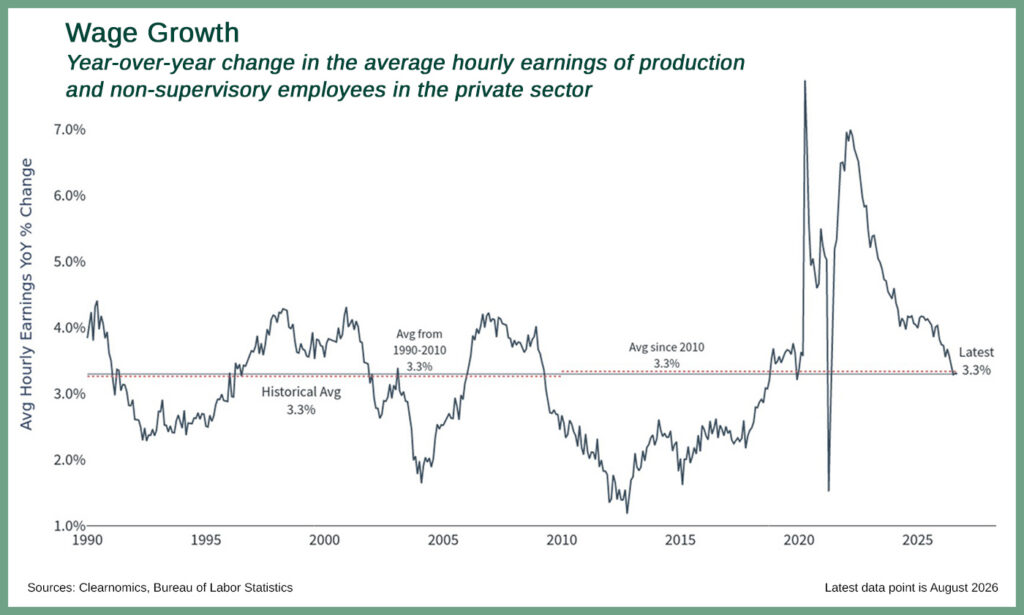
While this gap does not immediately threaten baseline consumer lifestyles, it highlights a distinct shift in employer sentiment, especially during a time of record corporate profits. Companies, emboldened by the prospect of technological automation, may no longer feel fiercely beholden to worker demands. These cooling dynamics indicate we are walking into a denser fog that could eventually slow or halt our progress.
For now, however, the trail remains highly navigable, with the mist adding an element of intrigue to the ascent rather than a reason to turn back.
Corporate and Consumer Health: Elite Conditioning Meets the Reality of the Trail
On any arduous ascent, stamina, hydration, and daily conditioning dictate the expedition’s overall success. A golden rule of mountaineering is to never hike alone, as a partner provides critical safety, pacing, and support. However, your progress remains inextricably linked to your partner’s physical state on any given day.
This symbiotic relationship mirrors the dynamic between Corporate America and the everyday employee-consumer. In any high-functioning economic environment, employers and employees must share in the benefits of growth. When rewards skew too heavily toward one side, the partnership deteriorates. It is akin to a hiking partner who neglects to hydrate and succumbs to altitude sickness; once that threshold is crossed, the only viable solution is to abandon the summit and descend, effectively ending the journey for both.
Currently, Corporate America and the American consumer appear to be marching in lockstep, yet the distribution of economic benefits is becoming noticeably lopsided. Corporate enterprises are beginning to reap the immense, tangible rewards of AI integration, driving a historic surge in profitability.
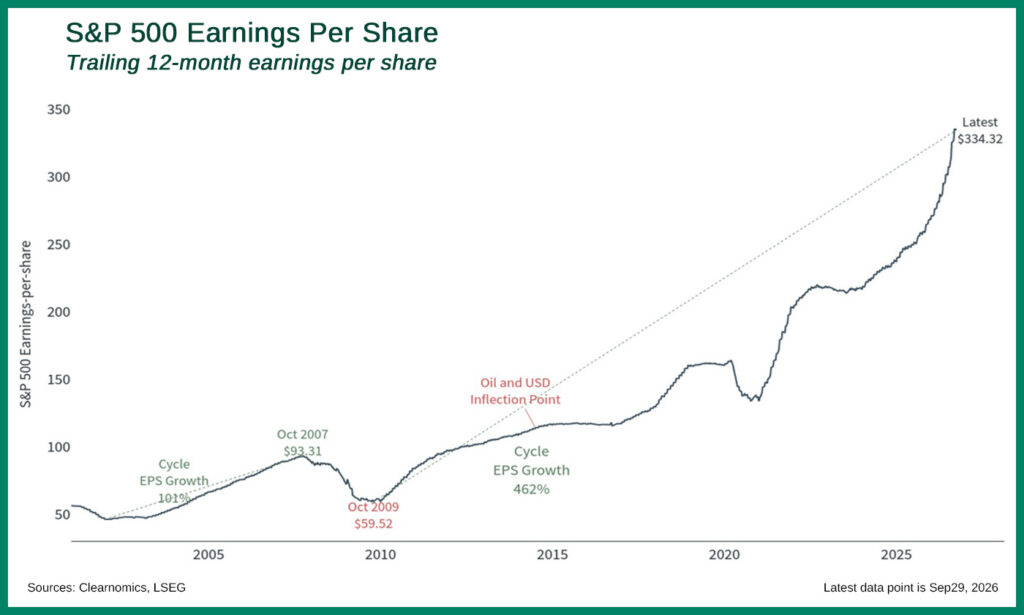
At the start of 2026, calendar-year earnings growth for the S&P 500 was projected at a respectable 13% to 18%. Today, having crossed the midpoint of the year, consensus estimates from FactSet have aggressively revised that forecast upward to a staggering 32%.
What makes this expansion truly remarkable—and proves it is more than mere financial sleight of hand—is the underlying mechanism driving it. Earnings growth this season is not simply a byproduct of companies passing higher-than-expected inflation on to consumers. Rather, the surge is rooted in genuine profit margin expansion: revenues are climbing while operational expenses are actively trending down.
Meanwhile, the labor market tells a contrasting story. Though largely stable, it has settled into a “no-fire, no-hire” holding pattern, characterized by sluggish job creation that falls short of a typical economic expansion. Compounded by a noticeable deceleration in wage growth relative to inflation, a stark imbalance emerges: corporate equities are achieving record highs and unprecedented profitability, while the labor force earns merely enough to stave off a decline in their standard of living.
Ultimately, for this economic ascent to remain viable, both partners must be equipped to complete the trail: even in the age of AI, Corporate America cannot sustain long-term success without a thriving labor force and a resilient consumer base.
Fiscal and Monetary Policy on a Collision Course: Navigating the Back Side of the Mountain
Certain trails are inherently treacherous, not because the path is excessively narrow, but because of predictable, severe weather patterns. On Colorado’s Long’s Peak, thunderstorms reliably blanket the mountain between noon and 4:00 PM. Above 13,000 feet, the alpine environment offers zero protection from the elements, making lightning strikes the primary cause of mortality. Yet, despite the danger, crowds hike it daily. If you can stomach the altitude and dodge the afternoon storms, the ascent is a spectacular, one-of-a-kind experience. The current market environment is remarkably similar.
We are still firmly in an investor’s market. Corporate America is firing on all cylinders, and the consumer has maintained remarkable health despite an inflationary environment. While macroeconomic challenges exist, the positives currently outweigh the negatives when it comes to economic growth.
However, we know this period of outsized equity performance cannot last indefinitely. Historically, one of the most reliable catalysts for ending a bull market is a Federal Reserve rate-hiking cycle designed to slow growth and combat inflation. The market does not typically break immediately; in fact, a late-cycle expansion generally enjoys 18 to 24 months of positive returns before the tightening takes full effect. At the end of that period, the U.S. economy has historically slipped into a recession—and that appears to be the trail we are currently navigating.
The Federal Reserve has clearly telegraphed its priority: combating non-transitory inflation by maintaining a restrictive, elevated interest rate environment. The central bank no longer believes rates are too high; rather, it is betting that the consumer and labor market are resilient enough to absorb steeper borrowing costs for a longer duration. Simultaneously, the federal government is running a $1.8 trillion annual deficit—a massive level of stimulative spending typically reserved for severe economic contractions where unemployment reaches double digits.
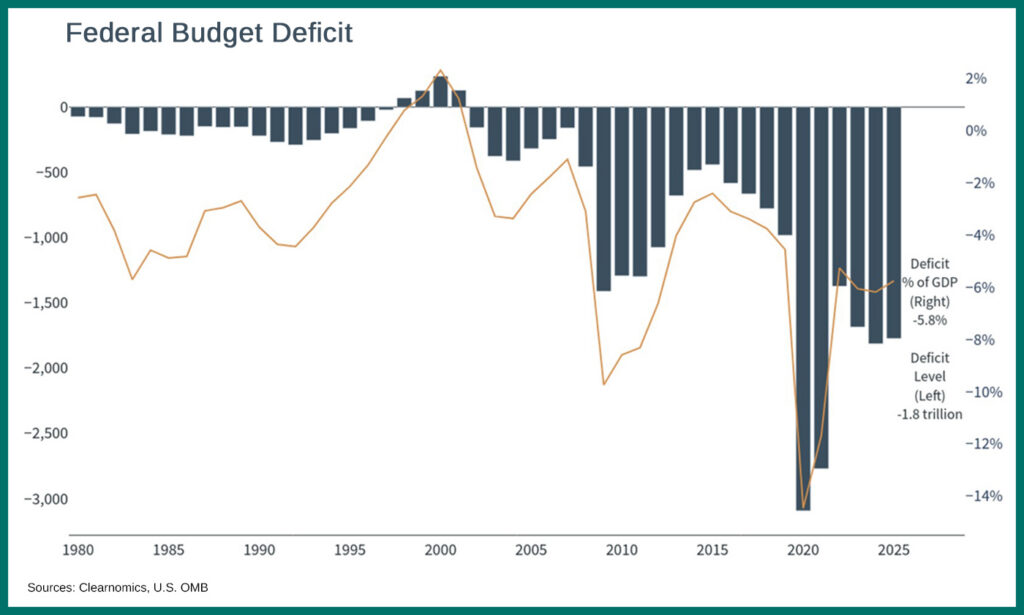
Injecting this magnitude of capital into an economy boasting 4.1% unemployment and an anticipated 32% surge in corporate earnings is a textbook recipe for sustained inflation. Compounding this pressure, the ongoing geopolitical conflict involving Iran continues to threaten global oil supplies, acting as an additional inflationary catalyst. Navigating this environment is exceedingly difficult when the central bank’s primary mandate is price stability.
When monetary restraint and fiscal expansion openly contradict one another, the resulting friction inevitably restricts economic growth. Historically, this collision follows a predictable sequence: the Fed raises short-term rates, borrowing costs spike, and heavily indebted businesses eventually buckle under the strain of servicing their obligations. As corporate lending and hiring stall, long-term interest rates and inflation finally fall, often dragging the broader economy into a recession before the Fed can pivot to lower rates. Navigating this late-cycle environment is the financial equivalent of hiking the exposed back side of Long’s Peak at 2:00 PM; a severe storm is not guaranteed, but the probability is uncomfortably high.
Conclusion: Should We Continue Hiking the Trail?
While this macroeconomic forecast—characterized by the collision of fiscal expansion and monetary restriction—appears ominous, it ultimately raises the essential mountaineer’s question: Should we continue hiking the trail?
It is vital to acknowledge the hazards and exposure this steep path presents. However, at GreenUp Wealth, we feel comfortable navigating this terrain. We remain positioned to push forward and benefit from the phenomenal fundamental strength in Corporate America, which remains anchored by a strained yet wealthy U.S. consumer.
To safely traverse this environment, we are “barbelling” our risk. This strategy balances our growth exposure in equities by seeking advantageous shelter in safe, yield-bearing investments that currently look exceptionally attractive.
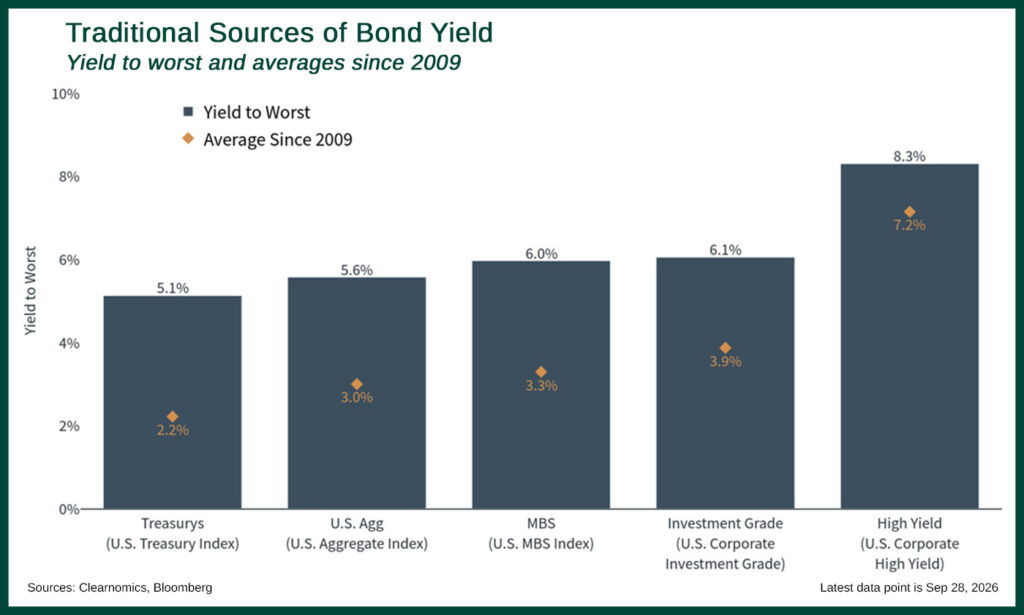
Specifically, we are securing yields of 5% to 7% against a stubborn core PCE inflation rate of 3.7%. For context, the 30-year real Treasury rate—which measures the yield of a 30-year U.S. Treasury minus the current rate of inflation—has averaged just 1.19% over the past decade. Today, that real yield sits at a highly compelling 3.29%. With interest rates hovering near multi-decade highs, the landscape for yield-producing assets—such as high-quality bonds, dividend-paying equities, and farmland—provides a formidable defense against market volatility and economic contractions.
Fortunately, the Federal Reserve is not navigating a linear trail. Just because we have historically seen central banks walk economies into a recession to cure inflation does not mean we are Sisyphus, doomed to continually roll the boulder up the same treacherous hill. Policymakers can alter their course at any time, and an incremental rate hike of 0.25% to 0.50% will not immediately crush the U.S. economy. We are simply acknowledging the historical precedent of what happens when fiscal and monetary policies openly collide.
For now, we will let the story play out, maintaining our upward momentum while keeping a vigilant eye on the horizon. If the clouds darken and we get too close to a storm, we are fully prepared to adjust our route and guide our clients to safety.
GreenUp Portfolio Updates
Dynamic/ESG/Index Models:- New Positions: Alerian MLP ETF (AMLP)
- Exited Positions: VanEck Uranium and Nuclear (NLR)
- New Positions: Bristol Myers Squibb Co (BMY), Shell PLC (SHEL), Western Midstream Partners LP (WES), T. Rowe Price Group, Inc (TROW)
- Exited Positions: Siemens AG (SIEGY), Abbvie (ABBV), Verizon (VZ), Coca-Cola Co (KO)
- New Positions: Space Exploration Technologies (SPCX), Astera Labs, Inc. (ALAB). Arista Networks, Inc. (ANET), Applovin Corp. (APP), Wheaton Precious Metals (WPM), Simon Property Group (SPG), DexCom, Inc. (DXCM), Constellation Energy (CEG), Alnylam Pharmaceuticals (ALNY), Visa, Inc (V)
- Exited Positions: ConocoPhillips (COP), McKesson Corp. (MCK), Salesforce, Inc. (CRM), Walmart, Inc. (WMT), RTX Corp. (RTX), Eaton Corp. Plc (ETN), Oracle Corp. (ORCL), Comcast Corp. (CMCSA), Oracle Corp (ORCL)
- New Position: CASH
- Exited Position: First Trust Small Cap Core AlphaDEX Fund (FYX), First Trust Small Cap Value AlphaDEX Fund (FYT), First Trust Technology AlphaDEX Fund (FXL), First Trust Large Cap Value Opportunities AlphaDEX Fund (FTA), First Trust Small Cap Growth AlphaDEX Fund (FYC)
GreenUp Street Wealth Management, LLC d/b/a GreenUp Wealth Management is an investment advisory firm registered with the Securities and Exchange Commission (“SEC”) under the Investment Advisers Act of 1940. Registration as an investment adviser does not imply a certain level of skill or training. The oral and written communications of an adviser provide you with information about which you determine to hire or retain an adviser. Form ADV Part 2A can be obtained by visiting https://adviserinfo.sec.gov and searching for our firm name. ADV Form 2B is available upon request. Neither the information nor any opinion expressed is to be construed as solicitation to buy or sell a security or personalized investment, tax, or legal advice.
This report has been provided for informational purposes only and is not intended as legal or investment advice or a recommendation of any particular security or strategy. The investment strategy and themes discussed herein may be unsuitable for investors depending on their specific investment objectives and financial situation. Information obtained from third-party sources is believed to be reliable though its accuracy is not guaranteed. Opinions expressed in this commentary reflect subjective judgments of the author based on conditions at the time of publication and are subject to change without notice. Past performance is not indicative of future results.
Any forecasts presented in this document, including estimates of returns or performance, are “forward looking statements”, are based upon certain assumptions about future events or conditions and are intended only to illustrate hypothetical results under those assumptions, and no assurances can be made that they will materialize. Forward-looking statements are based on an assumption that economic, market, political, operational, legal, tax, regulatory and other conditions will not deteriorate and, in some cases, improve.
Author

Daniel Greulich, CFA CFP®
Chief Investment Officer | Wealth Advisor | Ann Arbor, MI -- Daniel leads our Investment Committee and partners with Aaron Kirsch, Chief Client Advocacy Officer to design and implement client portfolios with your advisor. Daniel brings 14 years of practical experience as a trader, financial advisor, and money manager at both large and mid-sized financial services companies to GreenUp Wealth Management. In addition, he holds a CFP® designation and is also a CFA charterholder. This combination of experience and knowledge helps Dan confidently guide his clients through the development, execution and monitoring of their customized financial plans.
All Posts